How Korea Became the World's Skin Clinic Capital
 meeinup
Updated
Short answer: Korean skin clinics grew in four steps. Lasers arrived in the 1990s, Korean companies started making their own botox and devices in the 2000s and 2010s, a 2009 law let clinics recruit foreign patients, and from 2016 a tax refund made treatments cheaper for visitors. In 2025, 1.31 million foreigners were treated in Korean dermatology, more than in any other field.
In this guide
Timeline at a glance
| Year | What happened |
|---|---|
| 1917 | Korea's first dermatology department opens at Severance in Seoul1, 2 |
| Mid-1990s | Laser skin resurfacing comes to Korea3 |
| 1996 | Botox is approved in Korea4 |
| 2006 | The first Korean-made botulinum toxin is approved4, 5 |
| 2009 | A Medical Act change lets clinics recruit foreign patients6, 7 |
| 2014 | Shrink, a Korean-made HIFU lifting device, launches9 |
| 2016 | Foreign visitors can claim back VAT on cosmetic and skin treatments12 |
| 2019 | Korean products make up over 90% of the Korean toxin market4 |
| 2025 | 2.01 million foreign patients; 62.9% go to dermatology. The VAT refund ends on 31 December10, 12 |
1917 to the 1980s: treating skin disease
Korean dermatology began in 1917, when Oh Kung-sun set up the country's first department of dermatology at Severance Union Medical College in Seoul.1, 2 It was a department of dermatology and urology, and Oh led it for 18 years.2
For most of the next 70 years, a Korean dermatologist's job was what the word says: treating skin disease, such as eczema, fungal infections, psoriasis and skin cancer. Cosmetic work was a small part of it.
The 1990s: lasers arrive
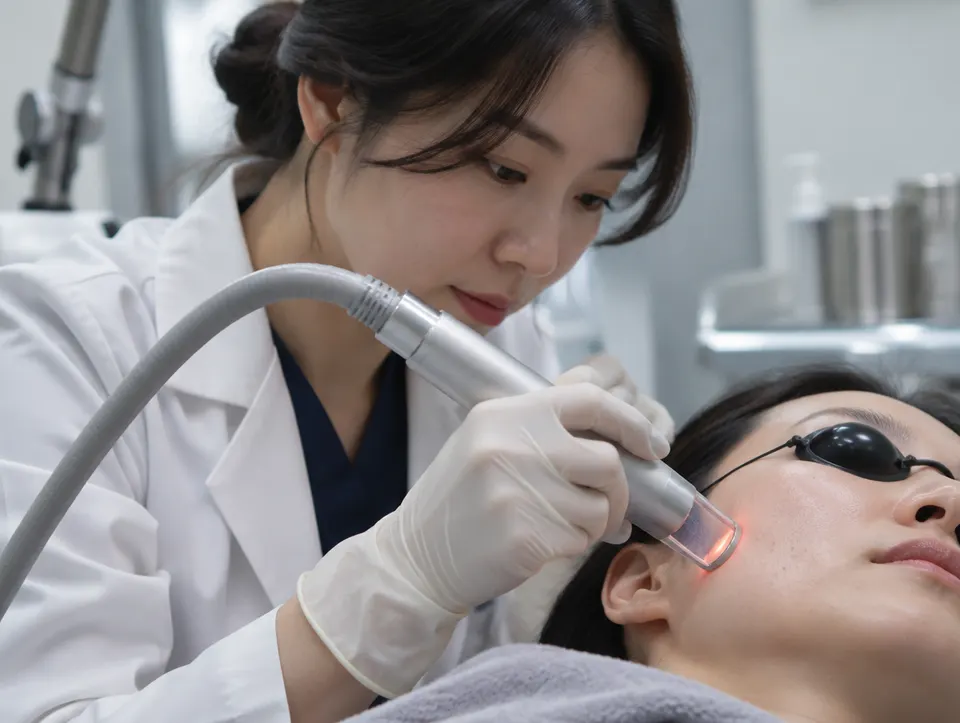
That began to change in the 1990s, when medical lasers reached Korea. Park Seung-ha, a plastic surgeon at Korea University, is credited with bringing laser skin resurfacing to Korea in the mid-1990s and teaching other doctors how to use it.3
Lasers let a clinic treat scars, wrinkles, pigment and blood vessels without surgery. That made cosmetic skin work something a small clinic could offer, not only a hospital.
The 2000s: Korean-made botox
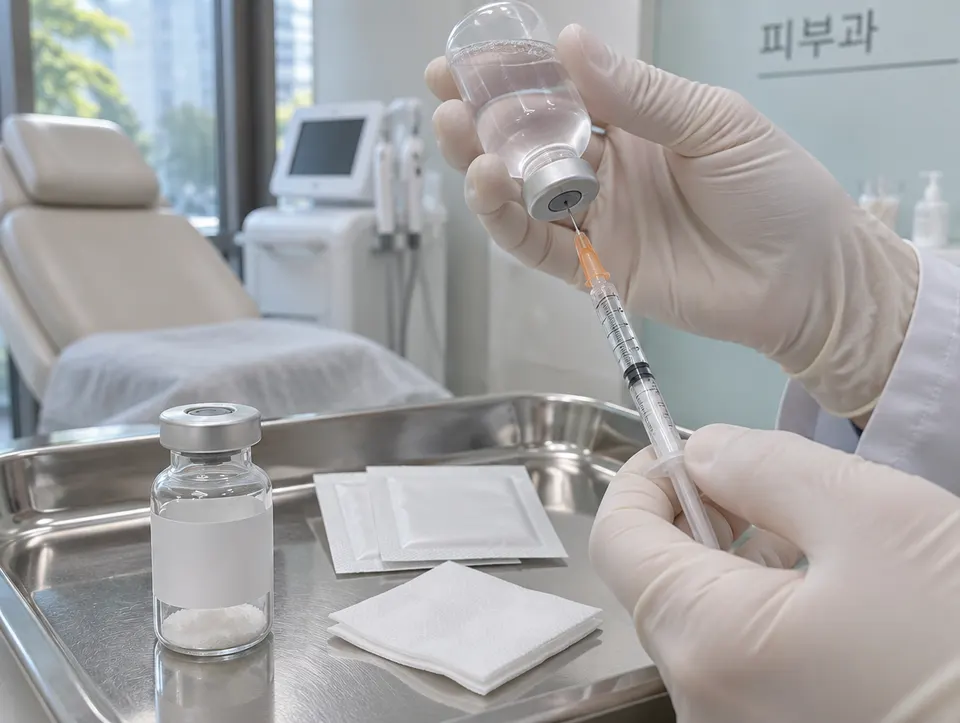
Botox, made by the American company Allergan, was first approved in Korea in 1996.4 For ten years Korea imported all of its botulinum toxin.
In 2006 Medytox won approval for Meditoxin, the first Korean-made toxin.4, 5 Hugel's Botulax followed in 2009 and Daewoong's Nabota in 2013.4, 5 Korean products took 70% of the Korean market by 2016 and more than 90% by 2019, sold at lower prices than the imports.4 By 2023, Korean companies had 25 approved toxin products.5
This is a big part of why a botox treatment in Seoul costs a fraction of what it does in the US or Europe. Our skin guides cover what common treatments cost in Seoul.
2009: foreign patients allowed

Until 2009, Korean clinics were not allowed to recruit patients from abroad. A change to the Medical Act that took effect in May 2009 let registered clinics and hospitals do it, and required them to report how many foreign patients they treat.6, 7
In 2009, 60,201 foreign patients were treated in Korea, more than double the 27,480 of 2008.7 Back then most came for check-ups and hospital care, not skin treatments.
The 2010s: Korean devices and lower prices
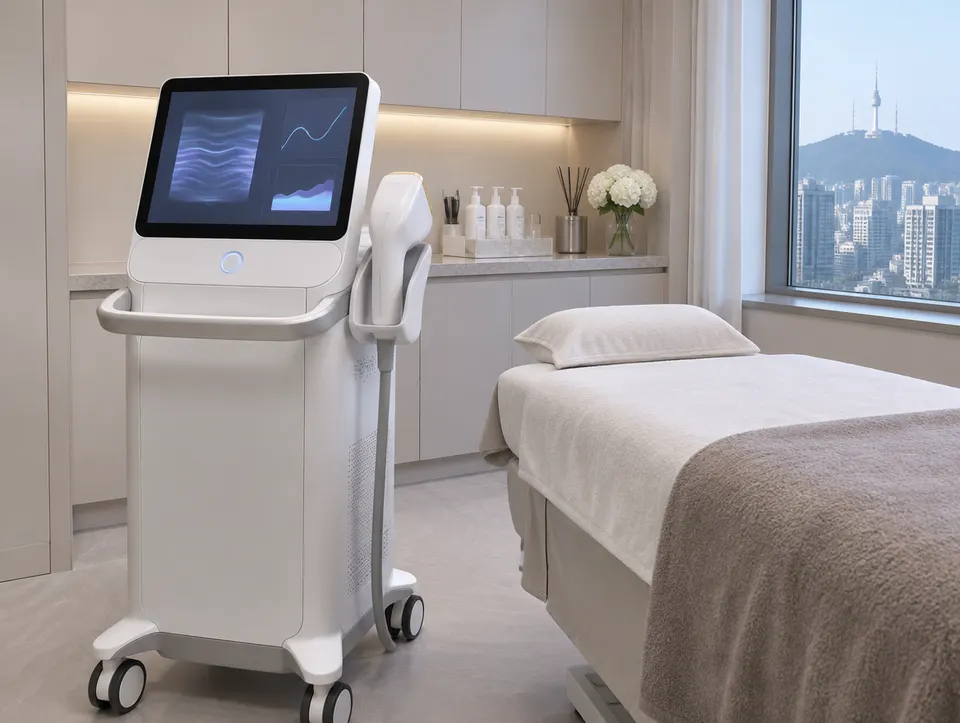
Korean companies then did with devices what they had done with toxin. Classys launched Shrink, a high-intensity focused ultrasound (HIFU) lifting device, in 2014. About 3,000 of the roughly 5,500 Korean clinics that offer HIFU use it.9 Medical Times describes it as a Korean-made alternative to imported devices at a lower price.8
Cheaper toxin and cheaper devices meant clinics could charge less per treatment and still make money on volume. That is the model common in Gangnam and Myeongdong today: many short treatments with set menu prices.
2016 to 2025: two million patients
Sources: KIHASA (2009), DailyMedi (2016), Dailian (2019), Ministry of Health and Welfare (2020 to 2025).7, 10, 11, 13
In April 2016 Korea started refunding VAT to foreign visitors who had cosmetic and skin treatments at registered clinics.12 Refunds grew from ₩7.9 billion (about US$5.9 million) in 2016 to ₩196.4 billion (about US$146.6 million) in 2025.13
After the pandemic, foreign patient numbers roughly doubled every year: 610,000 in 2023, 1.17 million in 2024 and 2.01 million in 2025, from 201 countries.10 In 2025, 1.31 million of them were treated in dermatology, 62.9% of the total, and another 11.2% in plastic surgery.10 The largest groups came from China, Japan, Taiwan, the US and Thailand.10 The Ministry of Health named China's visa-free entry, the VAT refund and the popularity of Korean pop culture and cosmetics as reasons for the jump.10
The VAT refund has ended. It applied to treatments up to 31 December 2025.13 Lawmakers sent bills to the National Assembly in 2026 to bring it back, one until 2027 and one until 2029, but neither had passed when we checked in November 2026.13, 14 Do not count on a refund when you budget.
What this means for you: reading the clinic sign
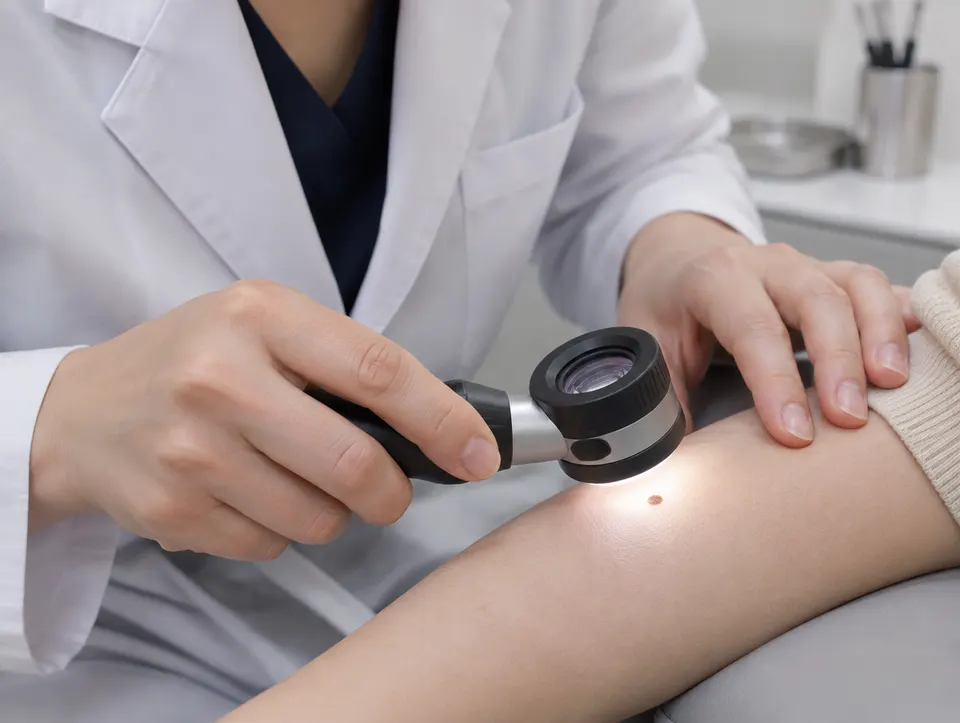
The boom has a side effect. Korea has about 2,950 board-certified dermatologists, and according to the Korean Association of Dermatologists about 9 in 10 doctors who treat skin at local clinics are not dermatology specialists.15 Any licensed doctor in Korea can offer skin treatments.
The sign tells you which kind of clinic you are walking into:15, 16
A clinic without a specialist is not necessarily worse for a simple laser or botox treatment. But if you have a skin condition, or want a doctor to check a mole or a rash, look for 피부과의원 in the name, or ask the clinic whether the doctor is a 피부과 전문의 (dermatology specialist).
For more on choosing, see our guides to Rejuran and PDRN.
Questions
Why are Korean skin clinics so popular?
Mostly price, choice and speed. Korean companies make their own botox and devices, which pushed prices down, and Seoul has thousands of clinics competing for the same patients.
When did dermatology start in Korea?
Korea's first dermatology department opened at Severance Union Medical College in Seoul in 1917, led by Oh Kung-sun.
How many foreigners go to Korean skin clinics?
In 2025, 1.31 million foreign patients were treated in dermatology in Korea, 62.9% of all foreign patients. In total 2.01 million foreign patients were treated in Korea that year.
Can foreigners still get a VAT refund on skin treatments in Korea?
No. The refund on cosmetic and skin treatments for foreign visitors ended on 31 December 2025. Bills to bring it back were sent to the National Assembly in 2026, but none had passed when we checked in November 2026.
How do I know if a Korean skin clinic has a dermatologist?
Look at the clinic name. A clinic whose name ends in 피부과의원 (dermatology clinic) is run by a board-certified dermatologist. If the sign shows the clinic name and then 진료과목 피부과 (department: dermatology) in smaller text, the doctor is not necessarily a dermatology specialist. Ask the clinic before you book.
Compare skin clinics in Seoul
See which Seoul clinics have a board-certified dermatologist and which are registered to treat foreign patients.
Compare clinicsUS dollar figures are rough estimates at ₩1,340 to US$1 (November 2026).
Sources
- Severance Hospital: Department of Dermatology, history
- Annals of Dermatology (2018): Centennial History of Yonsei University Dermatology in Korea, 1917 to 2017
- DailyMedi: Prof. Park Seung-ha, who brought laser resurfacing to Korea in the mid-1990s (2025) (in Korean)
- DailyPharm: Korean botulinum toxins and their share of the Korean market (2021) (in Korean)
- DailyPharm: 25 Korean botulinum toxin products approved since 2006 (2023) (in Korean)
- Medical Times: rules for clinics recruiting foreign patients under the 2009 Medical Act change (in Korean)
- Korea Institute for Health and Social Affairs: foreign patients after the 2009 law (60,201 in 2009, 27,480 in 2008) (in Korean)
- Medical Times: Classys Shrink, a Korean-made HIFU device, named a World Class Product (2018) (in Korean)
- Daum News: Classys and the Shrink HIFU device in Korean clinics (in Korean)
- Ministry of Health and Welfare: foreign patients in 2025 (press release, April 2026) (in Korean)
- Dailian: foreign patients grew from 497,000 in 2019 to 2.01 million in 2025 (in Korean)
- Medigate News: foreign patients by department and the VAT refund, 2016 to 2025 (October 2026) (in Korean)
- DailyMedi: bill to bring back the VAT refund until 2029 (August 2026) (in Korean)
- Hankyung: bill to extend the VAT refund sent to a National Assembly subcommittee (July 2026) (in Korean)
- Money Today: Korean Association of Dermatologists on who treats skin in Korea (March 2026) (in Korean)
- Medical Times: dermatologists ask to limit who can show dermatology on a clinic sign (2024) (in Korean)